Showing posts with label Kathryn Page Camp. Show all posts

Wednesday, March 21, 2018

In Search of a Common Language

by
Kathryn Page Camp


It’s a good thing writing isn’t a science, because nobody agrees on terminology.
I recently attended the Let’s Just Write conference run by the Chicago Writers Association. I enjoyed listening to other writers’ experiences and came away with some good craft tips.
But I was also very confused. Why? Because writers don’t have a common vocabulary. We may think we do, but then someone uses a different definition.
I’ve been at a number of conferences where literary fiction was defined as fiction that doesn’t fall within a particular commercial genre. Sometimes they add that it must have literary merit or be of social value, although that condition is meaningless because literary merit and social value, like art, are in the eye of the beholder. But at the conference in Chicago, I heard a different definition. One of the presenters said that fiction can’t be classified as literary unless it is written by someone with an MFA (Master in Fine Arts), especially if the author is a woman. That’s the first time I’ve heard it described that way.
The other definitional controversy isn’t as new but was given a new twist at the Let’s Just Write conference. Nobody seems to know what an independent (or indie) publisher is. Some people say it is anyone who publishes their own books, others say it is small or midsize presses that aren’t affiliated with one of the major publishing houses, and some say that the definition includes both. The new twist I heard in Chicago is that independent publishers use a traditional print run rather than a POD (print-on-demand) process.
Granted, both unexpected definitions came from the same person, and nobody else spoke up to either agree with or dispute them. So maybe that presenter is out-of-touch with the industry. But when I returned from the conference, I searched the Internet for definitions of literary fiction and independent publishing, and the results were just as confusing.
Yes, fiction is more art than science. But if we want to be taken seriously as a profession and an industry, we need to speak a common language.
And that means getting our definitions straight.
__________
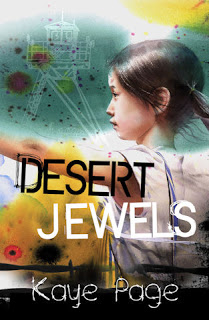
Kathryn Page Camp is a licensed attorney and full-time writer who writes adult non-fiction as Kathryn Page Camp and middle-grade fiction as Kaye Page. Writers in Wonderland: Keeping Your Words Legal was a Kirkus’ Indie Books of the Month Selection for April 2014, and her first middle-grade historical novel, Desert Jewels, was released in August 2017. You can learn more about Kathryn at www.kathrynpagecamp.com.

Wednesday, March 14, 2018

Writing Middle-Grade Fiction

by
Kathryn Page Camp


Middle-grade fiction is adult fiction written for a younger audience. In other words, middle-grade readers expect the same tightly written story, gripping plot, and believable characters that adults do. So don’t attempt to write middle-grade fiction unless you are willing to learn the techniques used by respected authors who write for grown-ups.
What are these techniques? Here is a partial list.
·       Hook the reader at the very beginning (the first sentence, paragraph, or page).
·       Use a consistent point-of-view. Even if there are several POV characters, make the POV consistent within a scene.
·       Show, don’t tell.
·       Give the protagonist and other major players distinctive personalities and individual character arcs.
·       Ensure that your main plot has rising stakes and plenty of conflict and tension. Middle-grade readers can handle a lot of bad news (think Harry Potter).
·       Write natural-sounding dialogue that doesn’t copy actual speech (e.g., avoid words like “um,” pauses, and meaningless words and phrases unless they convey something about the character or the action).
·       Eliminate unnecessary description, dialogue, and action. If it doesn’t add something vital to the story, cut it out.
·       Write with strong nouns and verbs (avoiding most adjectives and adverbs).
·       Trust your readers (e.g., don’t tell readers what they can figure out for themselves).
·       Provide a satisfying ending. Surprises are good, and the reader doesn’t have to see it coming. But the reader should be able to look back with hindsight and say, “of course.”
Look for writers’ conferences and online classes that teach these principles. And since they are the same for older audiences, you aren’t limited to conferences and classes geared to middle-grade authors.
Obviously, there are a few differences between adult and middle-grade fiction, but they don’t apply to the actual techniques. For information on how to gear a story to the right age audience, check out the IWC blog posts from August 1, August 9, and August 16, 2017.  
As Madeline L’Engle said, “a children’s book must be, first and foremost, a good book, a book with a young protagonist with whom the reader can identify, and a book which says yes to life.”
So if you want to write one, first learn the basics of writing fiction for adults.
__________
Kathryn Page Camp is a licensed attorney and full-time writer who writes adult non-fiction as Kathryn Page Camp and middle-grade fiction as Kaye Page. Writers in Wonderland: Keeping Your Words Legal was a Kirkus’ Indie Books of the Month Selection for April 2014, and her first middle-grade historical novel, Desert Jewels, was released in August 2017. You can learn more about Kathryn at www.kathrynpagecamp.com.
Wednesday, January 24, 2018

The Thing About Agents

by
Kathryn Page Camp


Here’s the thing about agents. Although most small and mid-size publishers take unagented submissions, most of the larger ones do not. So if I’m aiming at Scholastic or Penguin, I can’t do it on my own.
My past experience looking for agents and the wisdom gleaned from other writers has taught me two things.
1.     It’s almost as hard to find a good agent as it is to find a traditional publisher, and those agents that are easy to find don’t usually have the right connections.
2.     Author and agent need to click together like puzzle pieces. An effective author-agent relationship is also a close one, and personality matters.
Maybe that’s why my past attempts haven’t been successful. But now I’m at it again. I’ve spent the last few days researching agents to find the ones who might be the best fit for my recently completed middle-grade historical novel. Then I selected seven and sent each one a query letter.
But it’s a lot of work to do it right.
First, I went to www.manuscriptwishlist.com and sorted by agents who were interested in middle-grade fiction. I also used “historical” as a search term but soon discovered that the search doesn’t drill down that far—when “historical” came up, it was talking about fiction for adults. And I’d rather concentrate on agents who specialize in writing for children. But even those who specialize may not be the right fit. As mentioned above, personality matters, too. And how do I judge the personality of someone I’ve never met?
That’s one of the things I like about manuscriptwishlist.com. Some of the questions are designed to give you an insight into the agent’s personality. Not every agent takes advantage of the opportunity, but some do. One question asks for fun facts about that person, and a few answered it. More answered the question asking for their favorite books. Obviously, sharing the same taste in books doesn’t guarantee that we will click, and having different tastes doesn’t necessarily mean that person isn’t the right agent for me. But at least it gives me a place to start.
Unfortunately—or fortunately?—I didn’t recognize some of the books that were mentioned by several agents, so of course I had to go out and buy them and read them even though I don’t have the time. But I love to read middle grade fiction, so I can’t really complain.
After selecting potential agents, the next step was to go to their agency websites and made sure they are still working there. Wish lists don’t get updated as often as corporate websites do, so relying on the wish lists alone is a bad idea.
Once my agent list was set, it was time to submit. Each agent wants something different, and it is important to give them what they ask for. This meant looking at the submission guidelines on the agency website as well as those given in the wish list post. (For my thoughts on the importance of guidelines, read my December 7, 2016 post on this blog.) ]
Now it’s time to sit back and wait. No, now it’s time to write that next book.
While I wait.
__________
Kathryn Page Camp is a licensed attorney and full-time writer who writes adult non-fiction as Kathryn Page Camp and middle-grade fiction as Kaye Page. Writers in Wonderland: Keeping Your Words Legal was a Kirkus’ Indie Books of the Month Selection for April 2014, and her first middle-grade historical novel, Desert Jewels, was released in August 2017. You can learn more about Kathryn at www.kathrynpagecamp.com.

Wednesday, November 22, 2017

Write Thanksgiving Right

by
Kathryn Page Camp


It’s worth reminding ourselves how important it is to get the details right when writing about historical events. So this Thanksgiving week, I am reprinting parts of my November 26, 2014 IWC blog post titled “The Rest of the Thanksgiving Story.” Since I am only using parts of it, I made a few modifications to make the post flow more smoothly.
* * * * *
I wanted to add a picture of the first Thanksgiving to this post. Unfortunately, the only ones I found that were clearly in the public domain were also historically inaccurate. The photo at the head of this post is a good example. The clothing and feathers are all wrong, and the position of the two groups, with the members of the Wampanoag nation sitting on the ground and the Pilgrims standing, implies that the Pilgrims were the dominant race. Since a white woman is handing out the food, the picture could also imply that the Pilgrims provided the feast and the Native Americans were simply recipients.
As writers, we should be careful not to make the same mistakes.
When I think of the first Thanksgiving, I think of friendly Native Americans bringing their knowledge and skills and provisions to feed the starving Pilgrims. Without that help, the Pilgrims would have perished.
I’ve read comments on the Internet complaining that people today think the Pilgrims and the Native Americans merely shared a meal together, or even that the Pilgrims were the benefactors rather than the beneficiaries. I can’t say whether those complaints are valid, but it hasn’t been my experience. I learned at school and at home that Squanto and his tribe taught the Pilgrims how to survive, and my children learned the same lesson.
That’s one of the reasons I like Thanksgiving. It’s the one time of year when we remember the Native American participants as the generous people they were. That’s a lot better than the frequent stereotype of half-dressed warriors burning homes and scalping “innocent” white settlers.
Those of us with European ancestry have many reasons to be grateful to the Native Americans.
So when you write about the first Thanksgiving, make sure you get it right.
__________
The picture at the head of this post is by Jean Leon Gerome Ferris and was painted sometime around 1912-1915. It is in the public domain in the United States because of its age.
__________
Kathryn Page Camp is a licensed attorney and full-time writer who writes adult non-fiction as Kathryn Page Camp and middle-grade fiction as Kaye Page. Writers in Wonderland: Keeping Your Words Legal was a Kirkus’ Indie Books of the Month Selection for April 2014, and her first middle-grade historical novel, Desert Jewels, was released in August 2017. You can learn more about Kathryn at www.kathrynpagecamp.com.

Wednesday, October 18, 2017

The Wrong Question


“[A]sk not what your country can do for you—ask what you can do for your country.” These words were spoken by President John F. Kennedy at his January 20, 1961 inauguration. They were applauded at the time and have become one of the best-known quotes in American history. But even though people still give those words lip service, how many of us really agree with them?

Today’s generations (yes, all of them) have become self-centered. Before we do anything, we ask, “What will I get out of it?” Or we think we can have or be anything we want without working for it. But the truth is, what we get out of anything depends on what we put into it.

That also applies to membership in organizations such as Indiana Writers’ Consortium. Some members complain because IWC has been cutting back on its programs, and other refuse to join because they don’t see the value of membership. But whose fault is that? No nonprofit organization can survive without a committed membership.

Although money is always an issue, time is a greater one. The “Eat and Exchange” series has no overhead, but it faltered this year because nobody had the time to organize it. We put out a call for volunteers and got no response. Our call for people to fill Board positions met with the same lack of enthusiasm. People ask, “what can IWC do for me” rather than “what can I do for IWC.” So they get out of it what they put into it.

Let me get a couple of things straight. This blog post is my personal opinion and doesn’t speak for the organization. And IWC is not dying. We still run a vibrant conference, and I expect that to continue. But if you want more, you have to get involved.

To rephrase President Kennedy’s words: Ask not what IWC can do for you—ask what you can do for IWC.

You won’t regret it.

__________

The photograph of President Kennedy was taken on February 20, 1961 by a member of the White House Press Office. It is in the public domain because it was created by a federal government employee as part of his or her official duties.

__________

Kathryn Page Camp is a licensed attorney and full-time writer who writes adult non-fiction as Kathryn Page Camp and middle-grade fiction as Kaye Page. Writers in Wonderland: Keeping Your Words Legal was a Kirkus’ Indie Books of the Month Selection for April 2014, and her first middle-grade historical novel, Desert Jewels, was released in August 2017. You can learn more about Kathryn at www.kathrynpagecamp.com.

Wednesday, September 6, 2017

Ezine and Print Magazine Rights: Part II

by
Kathryn Page Camp

Last week I described three major types of ezine and print magazine rights. This week I’ll talk about some other common types.* This is not a complete list, and even the ones talked about in these two posts can be modified by contract, so make sure you read the submission guidelines and any formal contract you may be offered. More about that at the end of this post.
As a reminder from last week, when used in this post the words magazine, publication, and periodical include both print magazines and ezines. References to story, piece, or item include stories, articles, poems, and any other type of work that can be submitted to a magazine.
One-Time Rights
One-time rights allow the publication to publish your story once. If it wants to publish it again, it must get your permission.
Simultaneous Rights
If you grant simultaneous rights, you are probably trying to sell the story to more than one publication. As the name implies, simultaneous rights allow several periodicals to publish the piece at the same time. These rights are not the same as reprint rights since you may be selling the item for the first time.
Nonexclusive Rights
When a publication buys nonexclusive rights, you can sell the piece again at any time. Unlike one-time rights, however, nonexclusive rights authorize the magazine to reprint the piece in subsequent editions of its publication without further payment or permission.
You can explicitly agree to sell nonexclusive rights, but it is also the default. If you don’t say what you are selling and the publication doesn’t say what it is buying, it gets nonexclusive rights.
A Word of Warning
Rights can be modified by agreement, and even if the magazine doesn’t make you sign a contract, you still have one. In that case, the contract will usually combine the terms of your submission letter, the publisher’s acceptance letter, and the submission guidelines. If your submission letter offers one type of rights and the publisher doesn’t object, that is what you have sold. If the publisher says it will buy a different type of rights and you don’t object, then the acceptance letter governs. If both letters are silent but the submission guidelines tell you what the magazine buys, that is what you are selling. So read the submission guidelines carefully.
Because it’s important to know your rights.
__________
* The two posts in this series are taken, with modifications, from pages 166–170 of Writers in Wonderland: Keeping Your Words Legal by Kathryn Page Camp and are used by permission from me to me.
__________
Kathryn Page Camp is a licensed attorney and full-time writer who writes adult non-fiction as Kathryn Page Camp and middle-grade fiction as Kaye Page. Writers in Wonderland: Keeping Your Words Legal was a Kirkus’ Indie Books of the Month Selection for April 2014, and her first middle-grade historical novel, Desert Jewels, was released in August 2017. You can learn more about Kathryn at www.kathrynpagecamp.com.

Wednesday, August 30, 2017

Ezine and Print Magazine Rights: Part I

by
Kathryn Page Camp


In last week’s blog, Louis Martinez encouraged writers to find markets for their short stories. Some of the best markets out there are print magazines and ezines. And as Louis noted, what rights you sell them determines what you can and cannot do with that same content in the future. So this week and next I’ll talk about what those rights are.*

Since I don’t want to have to use “print magazine or ezine” and “story, article, or poem” repeatedly, I’m going to do the lawyer thing. When used in these posts, the words magazine, publication, and periodical include both print magazines and ezines. References to story, piece, or item include stories, articles, poems, and any other type of work that can be submitted to a magazine.

All Rights

Some periodicals, such as Highlights for Children, buy all rights. That means the magazine has complete control over what happens to the story you submitted. Essentially, the publication now owns the piece, and you are not allowed to resell it. You don’t even have the right to post it on your own website without the magazine’s permission.

Selling all rights does not usually prohibit you from writing another story on the same topic (but read your contract). However, the new piece cannot be merely a revision but must have a fresh approach. In other words (pun intended), you may have to start all over again.

Highlights pays well and is a prestigious name to have among your credits, so some writers are happy to sell it all rights. That’s your choice, but it should be a deliberate one.

First Rights, or First North American Rights

Most magazines buy first rights. That’s the right to be the first to publish the story. Similarly, first North American rights give the publication the right to be the first publisher in North America. Once the magazine has published the piece, however, control reverts to you and you are free to post it on your website, include it in a compilation, or resell it.

Reprint or Second Rights

The biggest advantage of first rights is second rights—also called reprint rights. Once the first rights holder has published your story, you can resell it as many times as you want. Reprint rights don’t usually pay as well as first rights, and some magazines won’t buy reprints at all. But when a magazine does buy reprint rights, it is paying for work you already did, so any size check is good. And second rights aren’t limited to the second time you publish the item—they also cover the third sale, and the fourth, and so on.

Since you can only sell first rights once, subsequent submissions should explain where and when the story previously appeared. You should also wait until the item is actually published by the first rights holder before submitting it elsewhere. This ensures that the second rights holder doesn’t publish it first by mistake.

I’ll cover several other types of rights in next week’s post.

__________

* The two posts in this series are taken, with modifications, from pages 166–170 of Writers in Wonderland: Keeping Your Words Legal by Kathryn Page Camp and are used by permission from me to me.

__________

Kathryn Page Camp is a licensed attorney and full-time writer who writes adult non-fiction as Kathryn Page Camp and middle-grade fiction as Kaye Page. Writers in Wonderland: Keeping Your Words Legal was a Kirkus’ Indie Books of the Month Selection for April 2014, and her first middle-grade historical novel, Desert Jewels, was released earlier this month. You can learn more about Kathryn at www.kathrynpagecamp.com.

Wednesday, August 16, 2017

Age It Right, Part III

by
Kathryn Page Camp


Vocabulary is an important part of aging a children’s book. There are several resources to guide you on vocabulary level, including Children’s Writers’ Word Book by Alihandra Mogilner and online vocabulary and spelling lists for parents and teachers arranged by grade. Use them.

But don’t rely on them.

First, these lists can’t cover every word in a child’s vocabulary. Just because a word isn’t on the list doesn’t mean your readers won’t know it.

Second, readers want to be challenged. For each of the middle-grade books I have completed so far, I used between six and nine beta readers spread over four grades. I asked them to complete a questionnaire, and here are two of the questions I asked:

Were there any words you didn’t know before but could figure out from the story? If so, write them here.

Were there any words that you didn’t understand unless you looked them up in a dictionary or asked someone older? If so, write them here.

Even though I frequently used words from the fifth and sixth grade lists, the third and fourth grade beta readers listed them in response to the first question rather than the second, indicating that they got the meaning from the text. So don’t let these lists limit you.

While it is important to challenge your readers, it is equally important not to frustrate them. If they have to make frequent trips to the dictionary (or to the kitchen to ask their parents), they’ll put the book down and leave it there.

So how can you challenge without frustrating? The best approach is to use context clues. In my first middle-grade book, Desert Jewels, Emi’s parents tell her to come to the parlor after she finishes washing the dishes. I don’t come right out and tell readers that “parlor” was a common word for living room or what we might now call the family room, but when she got there she found Papa reading a newspaper and Mama knitting a sock and she sat on a piano stool to talk to them (implying the presence of a piano). Other passages explicitly mention the piano in the room and a fancy clock that sits on top of it. The piano and Emi’s parents’ activities while in the parlor help today’s readers understand what the room is.

Then there is the word “spews,” which occurs in a tanka (a type of Japanese poem) that begins the book. It was on one beta reader’s list of words that she had never heard before but could figure out from the context. In this case, it is the words immediately around it that provide the clues:

Hate spews from your lips,

Calling me a “Dirty Jap.”

I don’t understand.

Although I don’t look like you,

I am an American.

Although context clues are the best way to increase a child’s vocabulary, there are rare times when they are not sufficient or when using them makes the passage convoluted or clunky. Desert Jewels tells the story of a Japanese American girl caught up in the anti-Japanese sentiment of World War II. I used some Japanese words for authenticity, but I couldn’t define them by context alone. In some cases the solution was simple—my protagonist didn’t understand them either, so she asked what they meant, and the reader learned along with her. But that approach won’t work if the person asking would already know, so use it sparingly.  

“Oh,” you may say, “I’ll just use a glossary.” Personally, I think that’s a copout. Expecting your readers to leaf back and forth between the story and a glossary is only a little better than sending them to the dictionary. Rely on context clues and a rare question instead.

That said, I did add a short glossary to Desert Jewels because of the Japanese words and some important but now mostly archaic English words and terms used at the time. But it is there to reinforce what the reader learns through context clues and the occasional question, not to replace it.

So when choosing vocabulary, write your story to challenge your readers without frustrating them.

__________

Kathryn Camp writes middle-grade fiction as Kaye Page and adult non-fiction as Kathryn Page Camp. Her first middle-grade historical novel, Desert Jewels, will be released this month. She has written two more middle-grade historicals that are currently circulating to publishers and agents and is developing a new website devoted to her children’s books. In the meantime, you can learn more about Kathryn at www.kathrynpagecamp.com.

Wednesday, August 9, 2017

Age It Right: Part II

by
Kathryn Page Camp


When writing for children, the subject matter must be suitable for the age level. That doesn’t mean you can’t deal with tough issues, but you must do it appropriately.
I’ll use death as an example.
Even the youngest children can be faced with the death of a loved one, so it makes sense to cover the issue in picture books. Some tell a story using animals as characters. Others talk about the death of a pet. Then there are books like Tomie dePaola’s Nana Upstairs & Nana Downstairs, which emphasizes the memories that remain after a boy’s great-grandmother dies. Regardless of the approach, the purpose at this age is always to comfort and never to frighten.
In picture books, the death usually occurs by natural causes, such as sickness or old age. There is no violence.
Although violence is still unusual, middle-grade books treat death differently. Katherine Paterson’s Bridge to Terabithia is the classic middle-grade novel on the subject. It beings by developing the friendship between the protagonist, Jess, and the new girl, Leslie. We come to love both characters, and when Leslie dies in an accident we cry with Jess over his (and our) loss. But the death takes place off-stage, and Jess learns to live with it. If you want to know more, you’ll have the read the book for yourself.
Bridge to Terabithia doesn’t treat death as gently as picture books do, but it still has a lighter touch than most young adult fiction. In fact, YA books can be quite dark. Two World War II novels by Ruta Sepetys illustrate this.
In between shades of gray, fifteen-year-old Lina, her mother, and her brother are arrested by the Soviets and sent to Siberia. Salt to the Sea follows four young people, three of whom are fleeing through East Prussia to escape the Soviets. Both books contain multiple deaths. Many are onstage, and all result from cruelty. As readers, we never come to terms with those deaths, and that’s how it should be.
As you can see, the age of the audience doesn’t necessarily limit the subject matter, but it does dictate how the writer treats it.
So tread carefully.
__________
Kathryn Camp writes middle-grade fiction as Kaye Page and adult non-fiction as Kathryn Page Camp. Her first middle-grade historical novel, Desert Jewels, will be released later this month. She has written two more middle-grade historicals that are currently circulating to publishers and agents and is developing a new website devoted to her children’s books. In the meantime, you can learn more about Kathryn at www.kathrynpagecamp.com.


Wednesday, August 2, 2017

Age it Right: Part I

by
Kathryn Page Camp

One of the most important—and difficult—aspects of writing for children is getting the age level right. Unfortunately, aging books appropriately is more of an art than a science. The best advice I can give you is to read recently written, currently popular books aimed at your audience. If you don’t know what they are, go to a physical bookstore and see what it carries on its shelves, then take them home and read them. Or you can get them at the library (or for your e-book) after you’ve complied a list of titles, but don’t do your original research there. A brick and mortar bookstore gives you a better idea of what today’s children are actually reading.
Years ago, I decided to write a series of early chapter books. I read books in that category, studied length and vocabulary levels, and wrote my first two masterpieces. Then I submitted them to publishers and my dream collapsed. I’m particularly grateful to the one publisher who gave me detailed comments that helped me see that I didn’t understand what was appropriate for my audience.
I shelved that project and turned to writing for adults. But eventually I gave children’s books another try, this time at the middle-grade level, and my first historical novel, Desert Jewels, is coming out later this month.
Although the general process is more art than science, there are some guidelines you should be familiar with when writing for children, and these guidelines are more science than art. They aren’t rules, and if you are J.K. Rowling or have an established following, you may be able to ignore them without serious consequences. But most of us are better off sticking to the guidelines.
The guidelines vary from publisher to publisher and few people are in complete agreement about what they are, but the following chart is representative. The categories come from the Society of Children’s Book Writers and Illustrators, and I referred to several sources when preparing the actual guidelines.

In general, children prefer to read about main characters who are just slightly older than the reader. As for length, when writing middle grade and young adult fiction, the longer lengths listed in the chart apply to fantasy and science fiction only, which tend to be longer than other genres. And don’t confuse category and genre. Children’s books—especially at the middle grade and YA levels—cover the same range of genres as adult books do, from historical to humorous to fantasy to YA romance. The “type” in the chart is a category, not a genre.
The guidelines are helpful, but the hardest part of aging your book is finding the right subject matter and sensitivity level. That is the topic of next week’s blog post.
__________
Kathryn Camp writes middle-grade fiction as Kaye Page and adult non-fiction as Kathryn Page Camp. Her first middle-grade historical novel, Desert Jewels, will be released later this month. She has written two more middle-grade historicals that are currently circulating to publishers and agents and is developing a new website devoted to her children’s books. In the meantime, you can learn more about Kathryn at www.kathrynpagecamp.com.

Wednesday, July 12, 2017

A Conference Panel for Everyone


In past years, attendees at the Steel Pen Creative Writers’ Conference listened to a brief welcome and then headed for the first breakout session. The 2017 conference will change that pattern and begin (after a brief welcome) with a general session panel titled “That’s Not What My Grandma Said: Preserving Regional Stories.”

People die, memories fade, and cultural history is lost. With them go the color and flavor that make any region unique and the seasonings that add authenticity to our written stories. So how do we keep cultural history alive? Join Jane Ammeson, Heather Augustyn, and Roland Cohen for a panel discussion on preserving regional stories. Kathryn Page Camp will moderate the panel.


The bios of the three distinguished panelists follow.

Jane Simon Ammeson is a freelance writer who specializes in travel, food and personalities. She writes frequently for Northwest Indiana Times, Edible Michiana, AAA Home & Away, Heartland Boating, Lakeland Boating, Cleveland Magazine, Long Weekends Magazine, Travel Indiana and the Herald Palladium. Her Bindu travel apps include Michigan Road Trips and Indiana Journeys. She’s authored ten books including Hauntings of the Underground Railroad: Ghosts of the Midwest, Murders That Made Headlines: Crimes of Indiana, A Jazz Age Murder in Northwest Indiana and East Chicago. She is a James Beard Foundation nominating judge for the Great Lakes Region.

Forever a Harbor girl, Jane attended E.C. Washington and worked after school and during the summers at the E.C. Public Library, a job she got through nepotism as her mother was employed there for a half century.


Heather Augustyn is author of Ska: An Oral History, McFarland, 2010; Don Drummond: The Genius and Tragedy of the World’s Greatest Trombonist, McFarland, 2013; Ska: The Rhythm of Liberation, Rowman & Littlefield, 2013; Songbirds: Pioneering Women in Jamaican Music, Half Pint Press, 2014; Alpha Boys School: Cradle of Jamaican Music, Half Pint Press, 2017; Dragon: The Story of Byron Lee, Ambassador of Jamaican Music, Half Pint Press, 2017; and Bob Marley: The Music of Pain and Promise, Rowman & Littlefield, 2018. She has been a correspondent for the Times of Northwest Indiana for 12 years and she teaches composition at Purdue University Northwest.


Ronald D. Cohen is an emeritus professor of history, Indiana University Northwest, Gary, Indiana, where he taught for 34 years. He is the author (or co-author) of numerous books, including Children of the Mill: Schooling and Society in Gary, Indiana, 1906-1960; Gary: A Pictorial History; Moonlight in Duneland; Rainbow Quest: Folk Music and American Society, 1940-1970; The Pete Seeger Reader, and numerous others. He lives in Gary, Indiana, and is a member of the Gary Historic Preservation Commission.
_____
This year's conference will be held on October 28 at the conference center at Fair Oaks Farms, just off I-65 near Renssselaer, Indiana. To learn more about the keynote speaker and the breakout sessions, go to http://www.inwriters.org/steel-pen-conference/. You can find the registration link on the same page. Or, if you have additional questions, contact us at steelpenconference@gmail.com.

We're excited about this year's conference, and we hope to see you there.


Wednesday, February 1, 2017

A Poor Man's Copyright? Don't Waste Your Stamp.

by
Kathryn Page Camp


I just read an Internet article at Crafty House titled “3 Easy Ways Writers Can Protect Their Work From Copyright Infringement,” and it irritated me. Why? Because one of the three suggestions is the so-called “poor man’s copyright,” which I believe gives false comfort.
Before I explain, you should understand how someone gets a copyright. The copyright is created the minute the author puts the work into tangible form. If it stays in your head, you don’t have a copyright. But once you transfer it to a sheet of paper or save it on your computer, you do. Registration is not required, nor is a copyright symbol, although both have their uses.
The poor man’s copyright—or the poor man’s postal copyright as it is sometimes called—is the practice of mailing your manuscript to yourself. It probably doesn’t go as far back as the Pony Express, but it’s almost that old. The idea is that the postmark will prove that you wrote it on or before the date on the postmark. Then if someone else publishes the material before you do, you can prove that you had already created it. That’s the theory, anyway. Unfortunately, I can think of a dozen ways to discredit that evidence in court. In any event, the poor man’s copyright is not even a copyright. All it does is provide shaky evidence that the person who mailed it may have written the material.
And if the concern is protecting information you have published on the Internet, the easiest way to prove that you got there first is to print off the Internet posting, complete with the date at the bottom of the page. While that evidence can be manufactured, too, it tends to be more reliable.
So what else can you do to protect your material? First, use a copyright notice. It doesn’t have to be on every single posting if the site itself contains an adequate notice, such as the one on this blog. A copyright notice won’t stop all intentional infringers, but most people who use someone else’s work do it out of ignorance. They simply don’t realize that the material is copyrighted. A notice will tell them that it is.
Federal copyright registration is not necessary, but it does have advantages. For one thing, you cannot sue for copyright infringement unless the material is registered. Registration also provides a legal presumption that the person who registered it first is the copyright owner. The presumption can be rebutted, but it is much stronger evidence than a postmark.
Before I go, I would like to comment on another suggestion in the Internet article. (Suggestion number 2 was to include a copyright notice, which I agree with.) That other suggestion is to register for a Creative Commons license. There are many different Creative Commons licenses, but all of them provide permission for others to use your work in one way or another as long as you receive the credit. If that works for you, fine, although you should read all of the licenses carefully before chosing one. But if you want to keep strict control over use, then a Creative Commons registration is not for you.
Nothing can eliminate all infringement, especially in this Internet world. There are steps you can take to make it less likely, but the poor man’s copyright is not one of them.  
__________
I took the photograph of the Pony Express stables in 2013 while we were on vacation in St. Joseph, Missouri. It is © 2013 by Kathryn Page Camp.
__________
Kathryn Page Camp is a licensed attorney and full-time writer. Writers in Wonderland: Keeping Your Words Legal was a Kirkus’ Indie Books of the Month Selection for April 2014. The second edition of Kathryn’s first book, In God We Trust: How the Supreme Court’s First Amendment Decisions Affect Organized Religion, was released on September 30, 2015. You can learn more about Kathryn at www.kathrynpagecamp.com.

Wednesday, January 25, 2017

Preserving Our First Amendment Rights

by
Kathryn Page Camp


What are our First Amendment rights in today’s political, religious, and racially charged atmosphere? And why is it so important to keep our discussions civil?
There are many myths about the First Amendment. As a lawyer who has written two books that cover First Amendment issues, I feel qualified to dispel them.
1.     Myth: Private entities and individuals are bound by the First Amendment. The First Amendment only applies to government action. If a public library bans your book because of the subject matter or the position it takes on an issue, you may have an argument under the First Amendment. If a private bookstore refuses to carry the book for the same reason, you don’t. But you may not be able to force the library to stock it, either. Although a public library is a governmental entity, it may have a perfectly valid reason to refuse to place the book on its shelves. That’s because—
2.     Myth: Freedom of Speech is an absolute right. Freedom of Speech rights are subject to limited qualifications. For example, the First Amendment does not give anyone the right to riot or destroy property or disrupt traffic or trespass on private property. It also limits the use of libelous and fighting words, obscenity, and speech advocating illegal conduct. And a library has only so much shelf room and money for books, so it cannot stock every one that comes its way. As long as it uses objective criteria that are viewpoint neutral, it can refuse to carry your book.
3.     Myth: If I’m on public property, I can say whatever I want, whenever I want. Governments can place reasonable restrictions on the where, when, and how of speech on public property if those restrictions do not discriminate based on religious, political, or other content. For example, a town may not prohibit people from handing out leaflets on public sideways but it may use anti-litter ordinances to fine them for leaving a stack of flyers unattended on the municipal building steps. And nobody has the right to disrupt public business by conducting a sit-in on the floor of the legislature or shouting at the participants while a trial is in progress.
Even with these limitations, the First Amendment gives us precious rights that don’t exist in many countries. As Americans, and especially as Americans who write, we should all have an interest in preserving them.
Yes, the First Amendment protects name-calling and swearing and knee-jerk opinions by prohibiting the government from banning and punishing them. But just because we can do something doesn’t mean we should. One way to preserve Freedom of Speech is to keep the discussion civil. It’s only when Americans pass these boundaries that people start losing their respect for the First Amendment.
Even when I disagree with someone, I agree with this quote often attributed to Voltaire:
I disapprove of what you say, but I will defend to the death your right to say it.
The First Amendment gives us the freedom to say what we want even when others disagree, and that’s one reason I’m glad to be an American.
_________
Kathryn Page Camp is a licensed attorney and full-time writer. Writers in Wonderland: Keeping Your Words Legal was a Kirkus’ Indie Books of the Month Selection for April 2014. The second edition of Kathryn’s first book, In God We Trust: How the Supreme Court’s First Amendment Decisions Affect Organized Religion, was released on September 30, 2015. You can learn more about Kathryn at www.kathrynpagecamp.com.