Showing posts with label writing for chldren. Show all posts

Wednesday, March 14, 2018

Writing Middle-Grade Fiction

by
Kathryn Page Camp

Middle-grade fiction is adult fiction written for a younger audience. In other words, middle-grade readers expect the same tightly written story, gripping plot, and believable characters that adults do. So don’t attempt to write middle-grade fiction unless you are willing to learn the techniques used by respected authors who write for grown-ups.
What are these techniques? Here is a partial list.
·       Hook the reader at the very beginning (the first sentence, paragraph, or page).
·       Use a consistent point-of-view. Even if there are several POV characters, make the POV consistent within a scene.
·       Show, don’t tell.
·       Give the protagonist and other major players distinctive personalities and individual character arcs.
·       Ensure that your main plot has rising stakes and plenty of conflict and tension. Middle-grade readers can handle a lot of bad news (think Harry Potter).
·       Write natural-sounding dialogue that doesn’t copy actual speech (e.g., avoid words like “um,” pauses, and meaningless words and phrases unless they convey something about the character or the action).
·       Eliminate unnecessary description, dialogue, and action. If it doesn’t add something vital to the story, cut it out.
·       Write with strong nouns and verbs (avoiding most adjectives and adverbs).
·       Trust your readers (e.g., don’t tell readers what they can figure out for themselves).
·       Provide a satisfying ending. Surprises are good, and the reader doesn’t have to see it coming. But the reader should be able to look back with hindsight and say, “of course.”
Look for writers’ conferences and online classes that teach these principles. And since they are the same for older audiences, you aren’t limited to conferences and classes geared to middle-grade authors.
Obviously, there are a few differences between adult and middle-grade fiction, but they don’t apply to the actual techniques. For information on how to gear a story to the right age audience, check out the IWC blog posts from August 1, August 9, and August 16, 2017.  
As Madeline L’Engle said, “a children’s book must be, first and foremost, a good book, a book with a young protagonist with whom the reader can identify, and a book which says yes to life.”
So if you want to write one, first learn the basics of writing fiction for adults.
__________
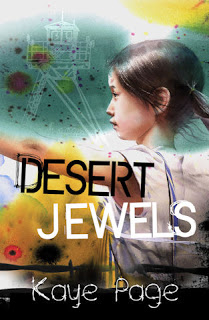
Kathryn Page Camp is a licensed attorney and full-time writer who writes adult non-fiction as Kathryn Page Camp and middle-grade fiction as Kaye Page. Writers in Wonderland: Keeping Your Words Legal was a Kirkus’ Indie Books of the Month Selection for April 2014, and her first middle-grade historical novel, Desert Jewels, was released in August 2017. You can learn more about Kathryn at www.kathrynpagecamp.com.

Wednesday, August 16, 2017

Age It Right, Part III

by
Kathryn Page Camp


Vocabulary is an important part of aging a children’s book. There are several resources to guide you on vocabulary level, including Children’s Writers’ Word Book by Alihandra Mogilner and online vocabulary and spelling lists for parents and teachers arranged by grade. Use them.

But don’t rely on them.

First, these lists can’t cover every word in a child’s vocabulary. Just because a word isn’t on the list doesn’t mean your readers won’t know it.

Second, readers want to be challenged. For each of the middle-grade books I have completed so far, I used between six and nine beta readers spread over four grades. I asked them to complete a questionnaire, and here are two of the questions I asked:

Were there any words you didn’t know before but could figure out from the story? If so, write them here.

Were there any words that you didn’t understand unless you looked them up in a dictionary or asked someone older? If so, write them here.

Even though I frequently used words from the fifth and sixth grade lists, the third and fourth grade beta readers listed them in response to the first question rather than the second, indicating that they got the meaning from the text. So don’t let these lists limit you.

While it is important to challenge your readers, it is equally important not to frustrate them. If they have to make frequent trips to the dictionary (or to the kitchen to ask their parents), they’ll put the book down and leave it there.

So how can you challenge without frustrating? The best approach is to use context clues. In my first middle-grade book, Desert Jewels, Emi’s parents tell her to come to the parlor after she finishes washing the dishes. I don’t come right out and tell readers that “parlor” was a common word for living room or what we might now call the family room, but when she got there she found Papa reading a newspaper and Mama knitting a sock and she sat on a piano stool to talk to them (implying the presence of a piano). Other passages explicitly mention the piano in the room and a fancy clock that sits on top of it. The piano and Emi’s parents’ activities while in the parlor help today’s readers understand what the room is.

Then there is the word “spews,” which occurs in a tanka (a type of Japanese poem) that begins the book. It was on one beta reader’s list of words that she had never heard before but could figure out from the context. In this case, it is the words immediately around it that provide the clues:

Hate spews from your lips,

Calling me a “Dirty Jap.”

I don’t understand.

Although I don’t look like you,

I am an American.

Although context clues are the best way to increase a child’s vocabulary, there are rare times when they are not sufficient or when using them makes the passage convoluted or clunky. Desert Jewels tells the story of a Japanese American girl caught up in the anti-Japanese sentiment of World War II. I used some Japanese words for authenticity, but I couldn’t define them by context alone. In some cases the solution was simple—my protagonist didn’t understand them either, so she asked what they meant, and the reader learned along with her. But that approach won’t work if the person asking would already know, so use it sparingly.  

“Oh,” you may say, “I’ll just use a glossary.” Personally, I think that’s a copout. Expecting your readers to leaf back and forth between the story and a glossary is only a little better than sending them to the dictionary. Rely on context clues and a rare question instead.

That said, I did add a short glossary to Desert Jewels because of the Japanese words and some important but now mostly archaic English words and terms used at the time. But it is there to reinforce what the reader learns through context clues and the occasional question, not to replace it.

So when choosing vocabulary, write your story to challenge your readers without frustrating them.

__________

Kathryn Camp writes middle-grade fiction as Kaye Page and adult non-fiction as Kathryn Page Camp. Her first middle-grade historical novel, Desert Jewels, will be released this month. She has written two more middle-grade historicals that are currently circulating to publishers and agents and is developing a new website devoted to her children’s books. In the meantime, you can learn more about Kathryn at www.kathrynpagecamp.com.